Project Initiation
General System & Permissions
Release Notes
January 2026
May 2025
September 2024
June 2024
January 2024
December 2023
September 2023
August 2023
July 2023
June 2023
May 2023
Supplier Management How-To Guides
Supplier Admin & Information Management
Data Governance Dashboard
Supplier Creation
Onboarding Management Plans
Completing Activities
Assigning Classifications to a Supplier record
Issuing an External Assessment
Supplier Status
Supplier Onboarding Dashboard
Assigning Contacts & Stakeholders
Uploading Documents to a Supplier record
Suppliers Dashboard
Supplier Compliance Management
Assigning Insurances and Certifications
Insurances & Certifications Dashboard
Team Governance Dashboard
Assessment Summary Dashboard
Supplier Risk & Issue Management
Issuing a Risk Assessment
Risk Assessments Dashboard
Creating a Supplier Risk
Managing a Supplier Risk
Creating a Supplier Issue
Managing a Supplier Issue
Supplier Risk Management Dashboard
Supplier Relationship & Performance Management
Contract Management How-To Guides
Contract Admin & Information Management
Contract Creation
Assigning Classification(s) against a Contract record
Contract Health Drivers & Checklist Completion
Contract Setup Dashboard
Uploading Documents to a Contract record
Contracts Dashboard
Foreign Currency
Contract Milestone & Key Date Management
Contract Renewals Management
Sourcing Management How-To Guides
Creation and Planning
Sourcing Activity Creation
Planning Tab
If you are Planning with Quick Quotes
If you are Planning with Opportunities Hub
Completing the Planning Phase
At Market
If you are At Market with an external tool
If you are At Market with Quick Quotes
If you are At Market with Opportunities Hub
Completing the At Market Phase
Evaluation
Outcome
Procurement Act 2023
Procurement Act Introduction and Navigation
Transforming Public Procurement
Source- to-Contract and the Procurement Act
Source-to-Contract Procurement Act Prerequisites
Navigating Procurement Act Features Within Source-to-Contract
Overview of Procurement Act Notices
Procurement Act Deep Dive
Bolt Ons
Additional Help
Knowledge Deep Dive
Process Templates (Contracts)
Process - For System Users
Contract Stage Progression Process
Requesting Stage Approval
Approving Stage Approval Requests
Variation Process
Requesting Variation Approval
Approving Variation Approval Requests
Contract Process Comparison
Configuration - For System Administrators
Supplier Categories
Management Plans
Artefact Groups
Activities
Triggers and Schedules
Supplier Data Requests
Delegation of Authority - Configuration
Delegation of Authority - Process
Terminology & Configuration Guides
Frequently Asked Questions
Where can I find information on the Procurement Act features?
Why can't I apply a variation against my contract?
How do I filter within Analytics?
I cannot access certain areas of the system, why?
How do I switch email alerts on?
How do I 'Finalise' my contract?
How long does it take for Analytics to update?
What file types can I upload?
The OneAdvanced Customer Support Portal
Admin: How can I assign a User the 'Contract Manager' role on the Customer Support Portal?
How to raise a Support case?
Admin: How can I remove a User from the Customer Support Portal?
Customer Portal Guide
Admin: How can I grant Admin permissions to a User on the Customer Support Portal?
Admin: How can I find my organisation's Registration Code?
How do I access the OneAdvanced Customer Support Portal?
Admin: How do I approve a new User on the Customer Support Portal?
How can I raise a finance case with OneAdvanced?
- All categories
- Additional Help
- Knowledge Deep Dive
- Management Plans
Management Plans
Applicable modules: Supplier
Overview
Management plans are essentially a curated collection of artifacts that can be packaged and applied to suppliers. These plans are versatile and can be combined in various ways, similar to building blocks.
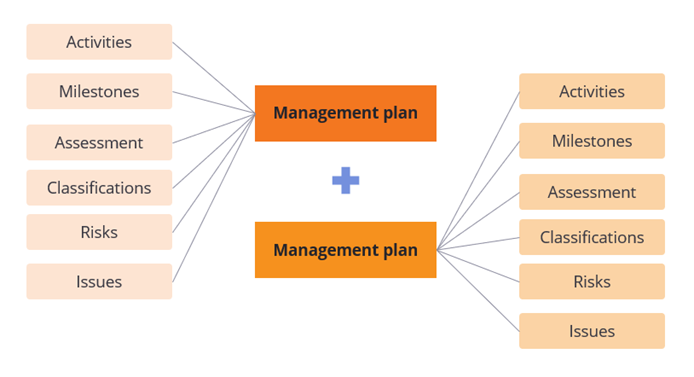
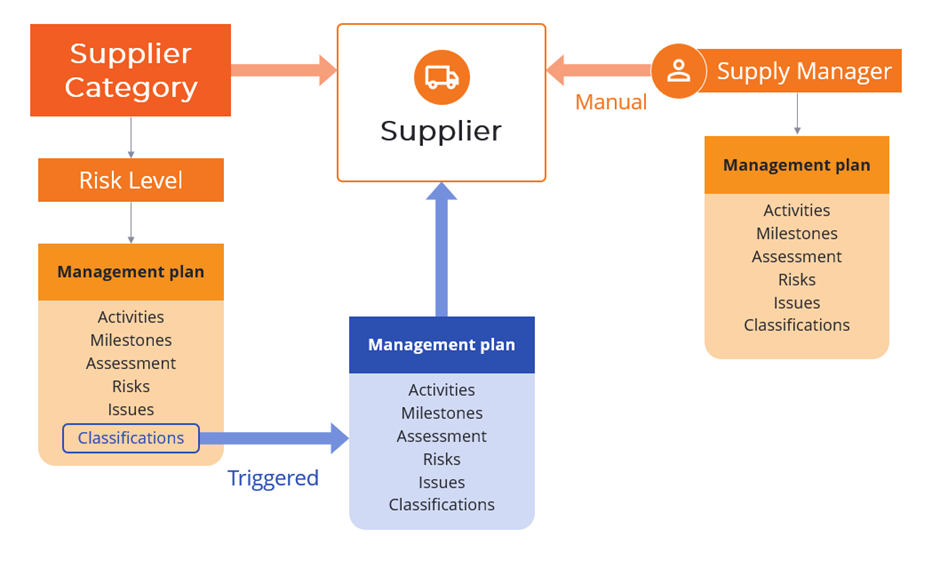
Management plans can be linked via three methods:
- they can be associated with the risk level of a Supplier category
- the use of a classification and trigger them
- they can be manually applied by a user with the supplier manager role (or higher)
Create and Edit
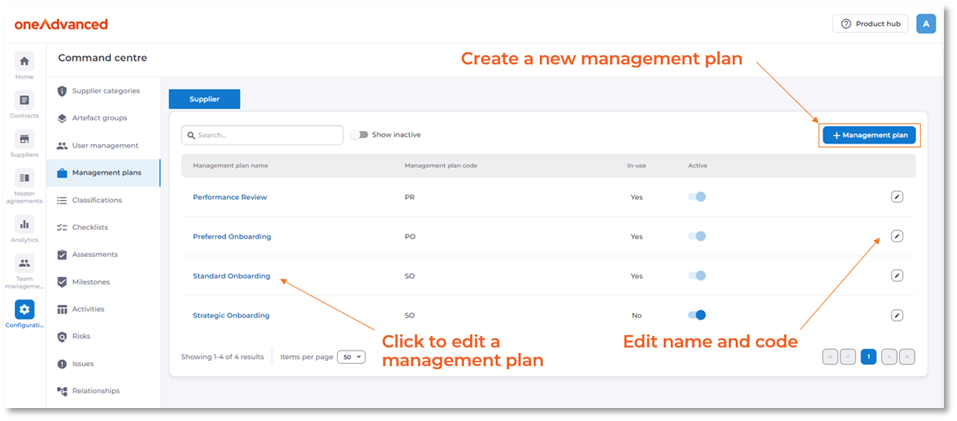
System administrators can add new Management Plans by clicking ‘+ Management plan’ via the Command Centre’s ‘Management plans’ Navigation item.
When creating a new management plan, you can save time by copying an existing plan with a similar purpose and then making the necessary modifications. Use the first drop-down menu to select the management plan you wish to copy.
If you prefer to start from scratch, leave this drop-down set to (NONE).
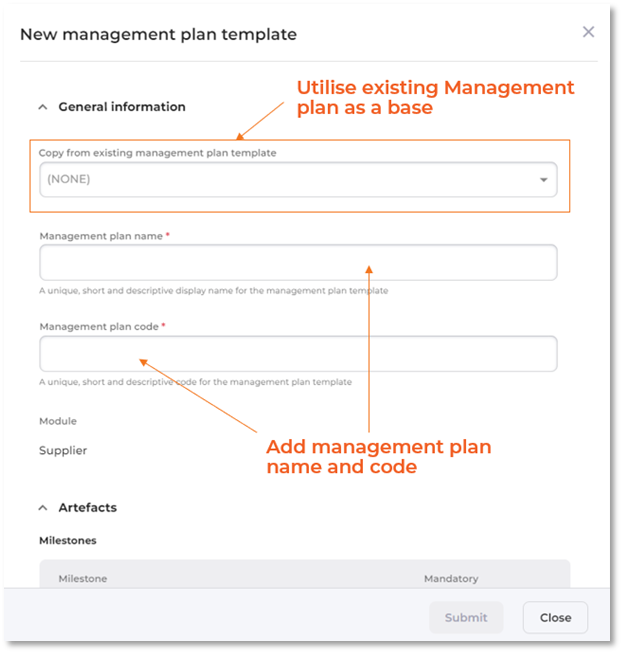
Give the management plan a name and a code.
Now you're ready to apply artefacts to address the plan. In the ‘Artefacts’ section you will see a sub-section for each applicable artefact. Use the “+ Add existing” button relative to the artefact type you would like to add, then use the dropdown to select the artefact.
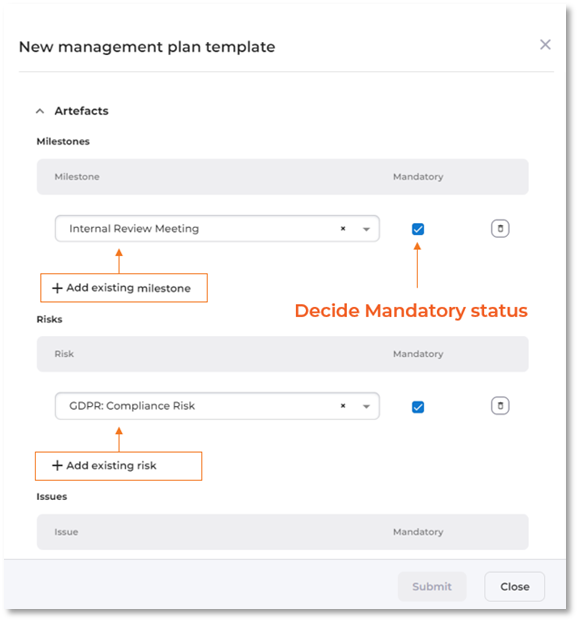
It's important to note the mandatory status of included artefacts. Mandatory artefacts are automatically generated for an associated supplier when a supplier category risk level or classification is applied using the management plan.
Conversely, non-mandatory artefacts are presented as optional to the supply manager, who must manually initiate their generation via the "Management Plan" navigation item.
The video below demonstrates the differences in user implications of the mandatory status.
Management Plan Versions
The ‘in-use’ status of a management plan, as shown on the main view, determines the impact of any changes made to the plan.
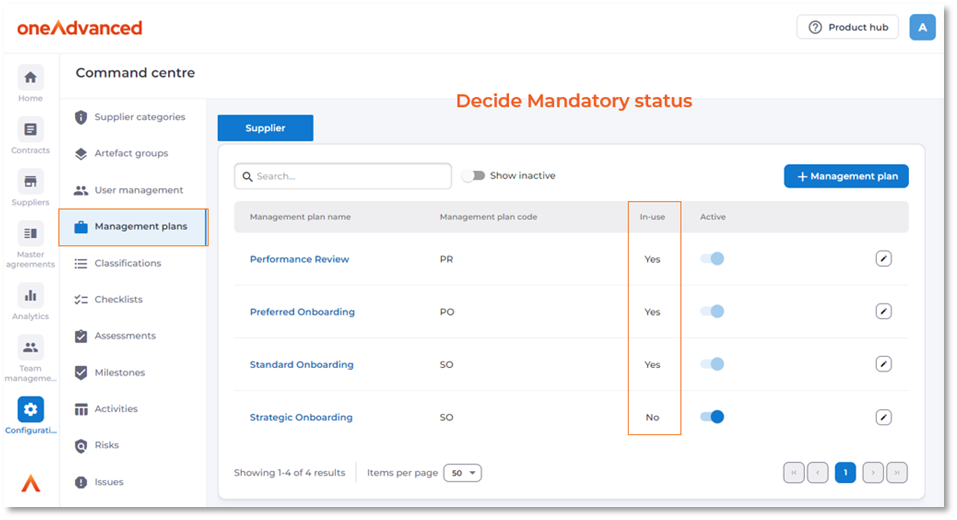
- If the status is ‘In-use=No’: Administrators can make any changes without any issues.
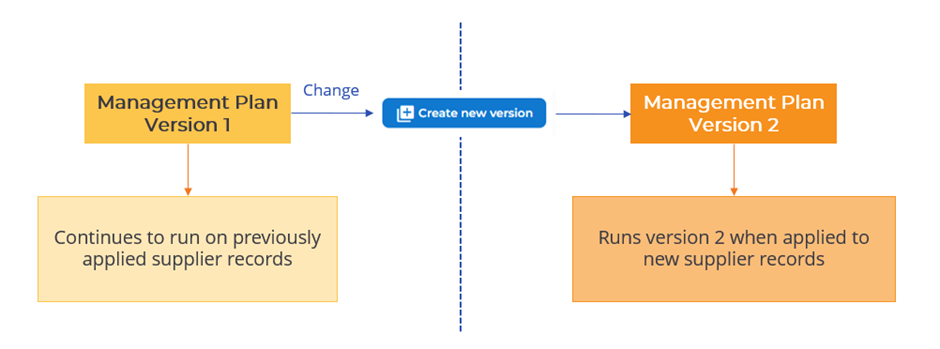
- If the status is ‘In-use=Yes’: Administrators can change the name and code of the management plan without any impact. However, changes to any attached artefacts will require saving a new version of the management plan.
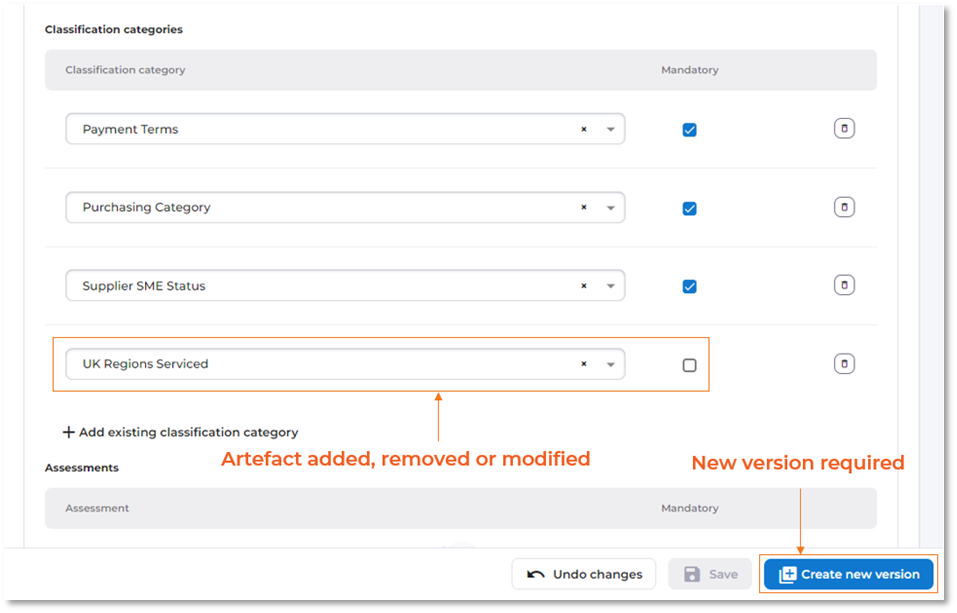
When a new version is created, records linked to the previous version will continue to reflect the old plan, while new records will reflect the most current version.
User application of Management Plans
Supplier managers will interact with management plans in three different ways
- When a management plan is applied via a risk rating
- When a management plan is applied via a classification
- Manually selecting and applying a management plan
Regardless of the method used, users will have the option to modify a management plan before applying it, generate non-mandatory items, and manage and review existing management plans.
The video below demonstrates management plans being applied using each of the three methods discussed.