Project Initiation
General System & Permissions
Release Notes
January 2026
May 2025
September 2024
June 2024
January 2024
December 2023
September 2023
August 2023
July 2023
June 2023
May 2023
Supplier Management How-To Guides
Supplier Admin & Information Management
Data Governance Dashboard
Supplier Creation
Onboarding Management Plans
Completing Activities
Assigning Classifications to a Supplier record
Issuing an External Assessment
Supplier Status
Supplier Onboarding Dashboard
Assigning Contacts & Stakeholders
Uploading Documents to a Supplier record
Suppliers Dashboard
Supplier Compliance Management
Assigning Insurances and Certifications
Insurances & Certifications Dashboard
Team Governance Dashboard
Assessment Summary Dashboard
Supplier Risk & Issue Management
Issuing a Risk Assessment
Risk Assessments Dashboard
Creating a Supplier Risk
Managing a Supplier Risk
Creating a Supplier Issue
Managing a Supplier Issue
Supplier Risk Management Dashboard
Supplier Relationship & Performance Management
Contract Management How-To Guides
Contract Admin & Information Management
Contract Creation
Assigning Classification(s) against a Contract record
Contract Health Drivers & Checklist Completion
Contract Setup Dashboard
Uploading Documents to a Contract record
Contracts Dashboard
Foreign Currency
Contract Milestone & Key Date Management
Contract Renewals Management
Sourcing Management How-To Guides
Creation and Planning
Sourcing Activity Creation
Planning Tab
If you are Planning with Quick Quotes
If you are Planning with Opportunities Hub
Completing the Planning Phase
At Market
If you are At Market with an external tool
If you are At Market with Quick Quotes
If you are At Market with Opportunities Hub
Completing the At Market Phase
Evaluation
Outcome
Procurement Act 2023
Procurement Act Introduction and Navigation
Transforming Public Procurement
Source- to-Contract and the Procurement Act
Source-to-Contract Procurement Act Prerequisites
Navigating Procurement Act Features Within Source-to-Contract
Overview of Procurement Act Notices
Procurement Act Deep Dive
Bolt Ons
Additional Help
Knowledge Deep Dive
Process Templates (Contracts)
Process - For System Users
Contract Stage Progression Process
Requesting Stage Approval
Approving Stage Approval Requests
Variation Process
Requesting Variation Approval
Approving Variation Approval Requests
Contract Process Comparison
Configuration - For System Administrators
Supplier Categories
Management Plans
Artefact Groups
Activities
Triggers and Schedules
Supplier Data Requests
Delegation of Authority - Configuration
Delegation of Authority - Process
Terminology & Configuration Guides
Frequently Asked Questions
Where can I find information on the Procurement Act features?
Why can't I apply a variation against my contract?
How do I filter within Analytics?
I cannot access certain areas of the system, why?
How do I switch email alerts on?
How do I 'Finalise' my contract?
How long does it take for Analytics to update?
What file types can I upload?
The OneAdvanced Customer Support Portal
Admin: How can I assign a User the 'Contract Manager' role on the Customer Support Portal?
How to raise a Support case?
Admin: How can I remove a User from the Customer Support Portal?
Customer Portal Guide
Admin: How can I grant Admin permissions to a User on the Customer Support Portal?
Admin: How can I find my organisation's Registration Code?
How do I access the OneAdvanced Customer Support Portal?
Admin: How do I approve a new User on the Customer Support Portal?
How can I raise a finance case with OneAdvanced?
- All categories
- Project Initiation
- 2. Azure Admin Consent
2. Azure Admin Consent
Your environment has now been provisioned and you should now have your site URL to hand. The URL will be required as part of the below process.
Overview
This article primarily focuses on the Admin Consent procedure to be followed by your AAD administrator(s).
Supplier & Contract Management leverages Azure Active Directory (AAD) for user authentication, from a list of allowed AAD tenants, relying on a consent process that controls which applications can be accessed by your AAD users.
This consent process can be performed by your AAD Administrator on all users behalf for your organisation.
If required, see the links below for more detailed information on the methods implemented:
- The framework leverages the OAuth2 Auth Code flow from AAD https://docs.microsoft.com/en-us/azure/active-directory/develop/v2-oauth2-auth-code-flow
- The AAD consent process to control which applications can be accessed by your users https://docs.microsoft.com/en-us/azure/active-directory/develop/v2-permissions-and-consent
These articles can be used for reference and background information as required.
Providing Admin Consent to our Application
The Admin Consent process will need be performed by an AAD administrator with the Global Admin AAD role.
1. An AAD Global Admin should enter the URL for your environment, in a browser. (If you have not yet been sent your URL by the OneAdvanced team then please request this). The URL you are provided should look something like this:
https://<customerdomain>.spend.oneadvanced.com
Once the admin has navigated to the site, the following Permissions Request pop-up should be displayed. (You will be prompted to login if not already).
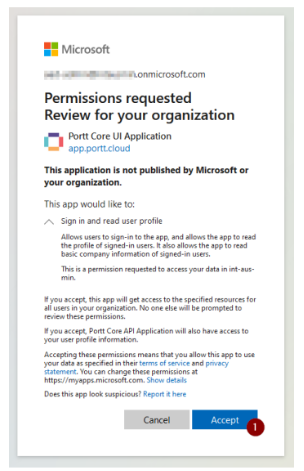
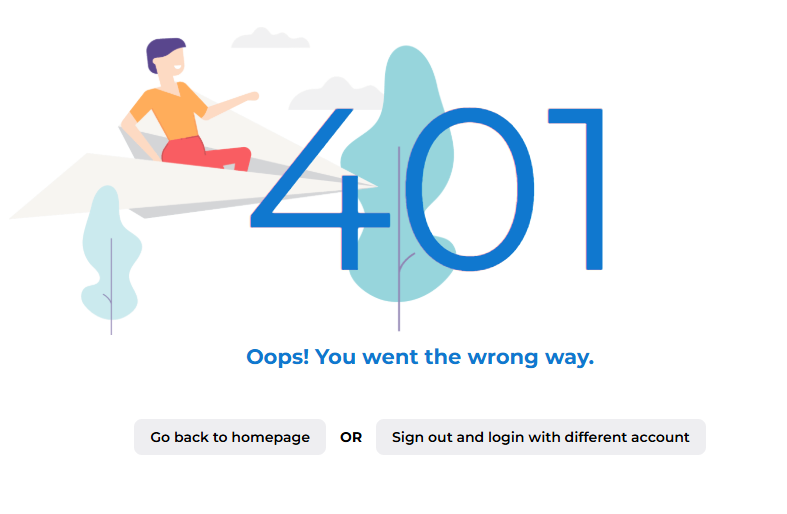
2. Select "Consent on behalf of your organisation", click on Accept and you will then be redirected back to the environment - The expected result after clicking Accept is for the page to load with a 401 error. If you see this error, the consent process has been successful.
3. The designated System Admin user for the application should now be instructed to attempt to access the application, using the URL provided by OneAdvanced. If the “Action-Centre” loads successfully for this user, then the consent process has been successful and all users on the system will have access to the Supplier & Contract Management environment.
Additional ways to verify Admin consent has been granted
This step is not required but can be used as another means to confirm whether the admin consent process completed successfully.
1. Return to the Azure Active Directory blade in the Azure Portal
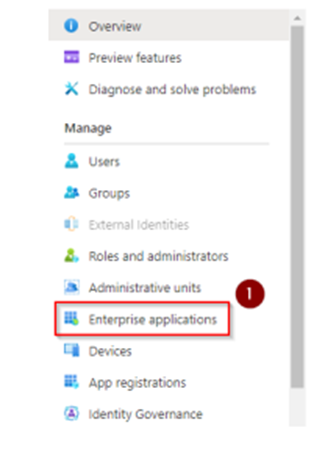
2. Select Enterprise applications from the side menu:
3. If the admin consent process completed successfully, you should see the following two applications listed (#1):
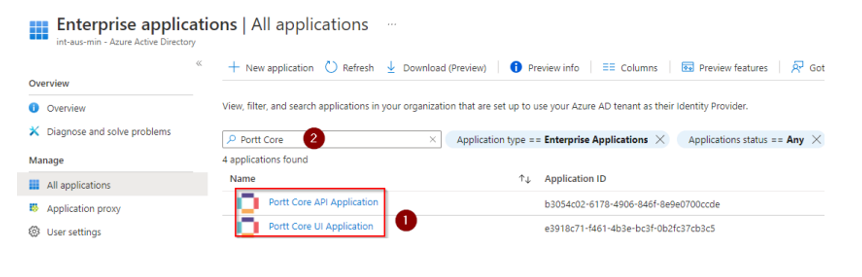
Note if your tenant has a large number of applications listed already, you can use the search bar to filter down to our apps (beginning with “Portt Core” as shown in #2)
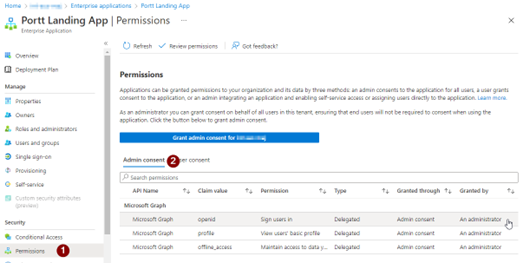
4. You can also review the permissions have been applied under the Admin consent tab within the new application: